Sunday, November 05, 2006

Weekend Cookbook Challenge #10 Round-Up: Neglected Kitchen Gadgets

Wow Everyone! Who knew so many of us had neglected kitchen gadgets even after we swore we didn't or that there are budding comics amongst us? Well, after reading today's Weekend Cookbook Challenge round up, you will!

We had fifteen terrific entries to the Weekend Cookbook Challenge #10: Neglected Kitchen Gadgets. I want to thank each of you for participating and especially Sara over at I like to Cook for hosting this event every month and for letting me co-host, it was heaps of fun!

Now on to the Round-Up:

We'll start off with our fearless leader, Sara at I like to Cook and her yummy Panini made in her often over looked George Foreman Grill


She made two Panini; one a savory panini and the other a dessert panini. T
he first was the Mozzarella, Basil Pesto and Peperonata Panini with warm gooey cheese seen above and the second was Sara's introduction to Nutella by way of a Nutella spread between two pieces of white bread and grilled.
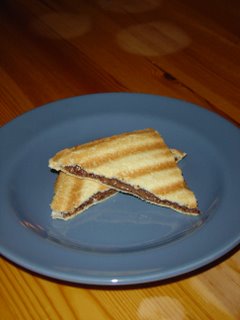
Sara is a Nutella convert now...

Next off in the realm of neglected gadgets we visit Ruth over at Once Upon A Feast. Ruth remembered she owned a crockpot after her daughter started talking about buying one. The last time Ruth used her poor crockpot was almost a year ago when she made crockpot lasagna. She was going to give her daughter her crockpot but now that she has used it again (and bought that great new cookbook to go with it!) maybe it won't sit in the back of the cabinet so long.
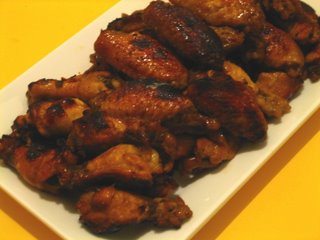

Ruth made the sticky but in a finger licking good kind of way Crockpot Peking Chicken Wings seen above.

Chrispy from Experimentation of Taste had a hard time finding a neglected kitchen gadget because she doesn't keep implements or cookbooks she doesn't use. So, she wrote instead about her newest but saved for fall implement: silicone mini loaf pans. She made the perfect the perfect fall quick bread below (along with her mini loaf pans): Ginger Pumpkin Bread.


You know, it is comforting to know that even "down under" in Australia, there are neglected kitchen gadgets lurking in drawers and cabinets. Anh at Food Lover's Journey is like most every one of us. She bought a pasta machine with visions of fresh homemade pasta dancing in her head. It was a walk by of her local pasta shop that shamed her into going home and taking her pasta machine from it's box and making the lovely looking
Fettuccini with Spicy Seafood Sauce, her favourite pasta dish.
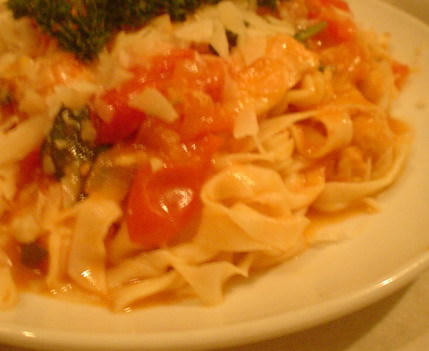


That picture (and recipe) makes me want to run right out and buy a pasta machine...

Back on the west coast of the US, in Oregon, we find Michelle from Je Mange la Ville dusting off her immersion, hand-held blender from it's hiding place to make a delicious sounding
Curried Acorn Squash and Leek Flan that she adapted from the Williams-Sonoma Autumn Cookbook.


Unfortunately, Michelle had a digital camera malfunction and none of her final product pictures turned out. But if you read the recipe you can almost taste the curry combined with squash and leek!

On the opposite coast of the US and just across the Charles River from me here in Cambridge, Jo at Amuse Bouche used not one but TWO neglected kitchen gadgets: her chinois and food mill to make good English comfort food for her hubby, Fish Pie. Not only is her fish pie amazing looking with it's perfectly browned top but how she came up with the recipe is amazing!
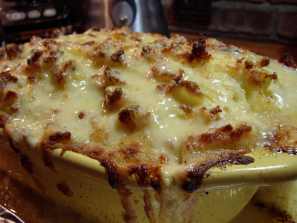

She combined three recipes and little of her cooking school know-how to make a recipe I'm dying to try out.

Lis from La Mia Cucina had her gadget picked out the minute we announced our theme of Neglected Kitchen Gadget. She picked her food mill as well to make a cherished family recipe from her mom for the ultimate fall soup, Beef Vegetable Soup.


She says using the foodmill on fresh tomatoes makes all the difference for the flavour. Judging from the picture above, I would believe her.

The next stop on the tour of neglected kitchen gadgets is in the heartland of America, to Columus, Ohio where Becke of the Columbus Foodie joins us for the very first time by plugging in her unused rice cooker to make a recipe she found browsing through Recipezaar, Golden Corral Bourbon Chicken.
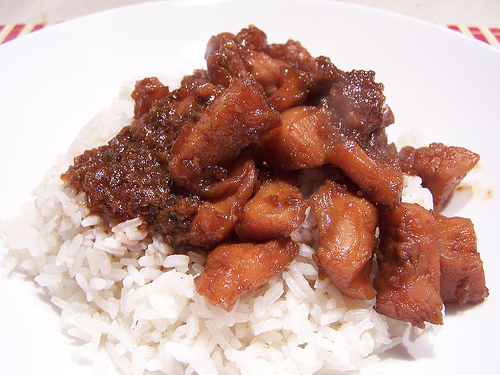


She says the recipe she used had too much bourbon but she found another she will try next time.

Ok, so it is getting close to Christmas and time to bake those cookies! Not only did Brilynn at Jumbo Empanadas find a neglected gadget but she had me laughing so hard reading her post that the folks in the office thought I was having some type of fit and almost called 911. Brilynn's neglected gadget is her icing gun, Ames which she used to make some wonderfully decorated Gingerbread Cookies. Not only did Brilynn give Ames a good workout on all these lovely decorated gingerbread men
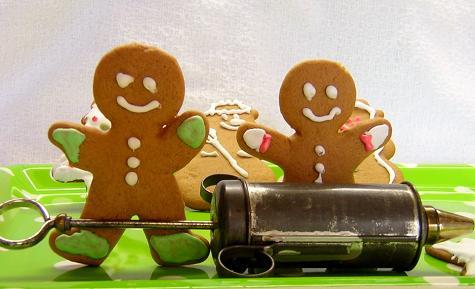


But she then made sure that the cookies got a chance to go see the great white outdoors of Canada and then get warmed up by a glowing fire...


I'm swapping cookies with Brilynn this Christmas!

Leaving winter in the Northern Hemisphere to head for summer in the Southern Hemisphere, we go back to Melbourne, Australia for this month's contribution by Haalo at Cook (almost) Anything at Least Once where the theme of WCC#10 elicited a little guilt at not using a present from her sister, her waffle maker. Judging from this wonderful stack of golden Ricotta Waffles


I'll bet she doesn't let the waffle maker stay neglected.

Using our transporter we are going back to Canada for some wonderful looking Lefse made courtesy of Pepper at Frugal Cuisine. This WCC was an opportunity for Pepper to use not only left-over mashed potatoes but also a family heirloom and a time honoured family recipe for Lefse.


The next kitchen we visit is also in Canada and bilingual at Cream Puffs in Venice with Ivonne but it wasn't Ivonne who we met next to the sink but rather Monsieur Mandoline, Ivonne's once often used French mandoline. Monsieur finds himself neglected due to an interloper, her food processor. Hoping to prove his true worth, Monsieur made quick work of the butternut squash for the delicious looking Butternut Squash Gratin with Goat Cheese and Walnuts.
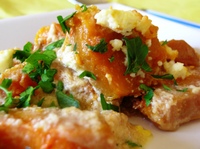

With results like this, let's hope Monsieur doesn't stay trapped in his wooden cabinet too long between uses.

The next entry for Weekend Cookbook Challenge #10: Neglected Kitchen Gadgets used this month's theme to not only use a neglected gadget but to get re-introduced to her kitchen! Andrea at A Small Group of Thoughtful Citizens squeaked in under the wire late last night by sending me an email telling me she was going to post but needed a little bit more time to remember where her kitchen was (just joking Andrea). She used her unused bread machine to make her grandmother's Cinnamon Rolls. And just in case those of us who only know Andrea as a crusader for worthwhile social causes think she can't actually cook, here is proof positive she does a darn fine job, apron or no apron...


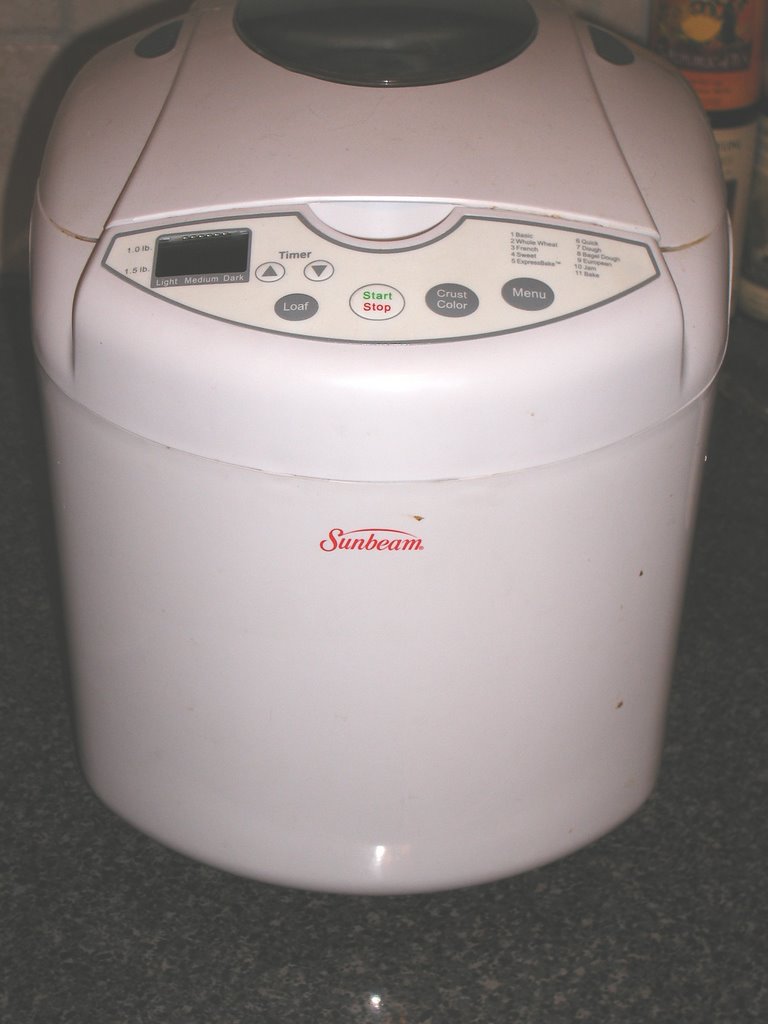
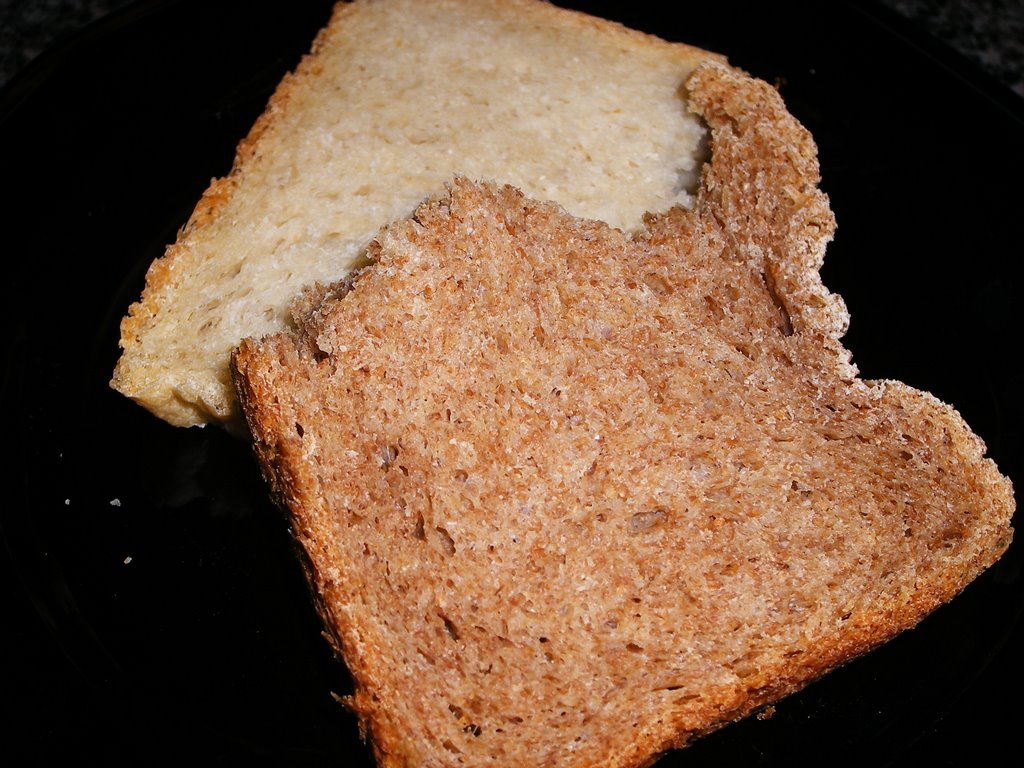
And since we are on the subject of neglected bread machines, here is my entry for this month with two breadmachine offerings: whole wheat and French bread.


In our final entry for this month's WCC, Pat over at Up a Creek Without a Patl finds her apple peeler/slicer/corer about once a year hiding out in the upper regions of her kitchen cabinets. This year she put her peeler/slicer/corer to some serious work making bunches and batches and, in this case, bushels of apple recipes: Apple Chips, Apple Spice Cake, Baked Apples, an Apple Tart, and her Blushing Apple Cream Pie.


I think I understand why her peeler/slicer/corer needs the rest of the year off!

WHEW.... that completes this month's round-up for WCC#10: Neglected Kitchen Gadgets. Thanks again everyone for participating! If I missed someone, please drop me or Sara a line or post a comment here. I'll update the round-up to include you.

It was lots of fun co-hosting and I'm looking forward to next month's event. Keep your eye out on the Weekend Cookbook Challenge blog for the theme I'm sure Sara will be posting very soon. Also keep your eye out for her round-up of the next Cookbook Challenge.


Saturday, November 04, 2006

A Cook Ahead of His Time

My dad is one of my biggest influences as a cook. My dad is a former Navy cook who went to chef school on the VA Plan and then went into hospital food service in the late 60’s with the idea that just because it was hospital food it should still taste like food. I grew up in his kitchen. He had a picture of me on his desk taken when I was about age four, standing in the big mixing bowl of one the Hobart mixers that his head baker could make enough bread dough in to feed the patients and staff of a 125 bed hospital. He would tell everyone who came into his office the last few years of his career, "I knew she would be a good baker because she always wanted to play in that darn mixer".

A man ahead of the ideas of the day, he would have themes like “Pancakes Any Way You Like Them All Day” or “Pizza by the Pound” in his cafeteria. He put a salad bar in the cafeteria before any other restaurant in town had one. He had a local baker who would make him four foot loaves of French bread in his huge ovens so my dad could run his “Subs by the Inch”, a once a month special he would run for the next thirty years. This special was so popular that the local police, firemen, and even mayor would stop by the hospital to buy lunch and talk with my dad about fishing, hunting, and local politics then take a sub home to their family for dinner. He made award winning potato and leek soup during the winter and hosted the largest pig roast in the area during the summer in the back parking lot of the hospital to raise money for local charities. He had a local farmer who sold him his sweet corn during the summer and his acorn squash during the fall. He had a little herb garden in his office and a kitchen garden out behind the laundry room. The local community clubs like the Elks and Eagles would hold their meetings in the hospital so they could have my dad do the lunch or dinner. Way before hospitals started doing “ala Carte” meals to the patient rooms my dad offered the service. “Just because someone is sick doesn’t mean they should have to have bad food and have to eat on the nurses schedules”. This didn’t make him popular with the various head nurses but he didn’t care. “They aren’t the ones sitting in those beds not feeling good and the least we can do for our patients is let them eat when they feel like it.”, he would explain whenever the head administrator would ask my dad to work with the nurses on a schedule.

His proudest moment during his tenure at the hospital was when the newspaper from the big city two hours away named his hospital cafeteria one of the top ten restaurants in the three county area five years in a row in the early 80’s. I had my first taste of curry when I was in middle school at the hospital cafeteria while having lunch with my dad. Until about five years ago, the hospital cafeteria was the only place anyone in town could get Indian food without driving two hours. He had one of the doctors from India show him how to make a good curry because he didn’t want to serve something that wasn’t “authentic”. My favourite memory of my dad at work was when he got into a shouting match on the phone with the head hospital bean counter one afternoon when I was visiting his office after school. The head bean counter, who wanted my dad to start using more canned vegetables because they were cheaper, was telling my dad he wouldn’t sign off on his purchase orders to a local supplier. My dad ended the argument by offering to “discuss it over lunch the next day”. The next night over dinner, I asked how his lunch with Mr. So-and-so was. He smiled and said “Well, kiddo, here’s the story. I made a stir-fry that I know is Mr. So-and-so’s favourite lunch. We normally make it with fresh corn, green beans, carrots, and almonds. Today I made it with all canned vegetables. When he tasted it and asked what was wrong with the food, I told him I was saving him money by using canned vegetables.” Mr. So-and-so never again asked my dad again to save him money.

When my dad wasn’t working, he would putter around our kitchen toying with recipes. He would take well-known cookbooks and figure out how to make a recipe that makes six to eight servings make one hundred servings. It was from him that I learned allspice is used to boost the flavour of cinnamon and nutmeg in pumpkin pie and the sage in stuffing but if you use too much of it, the taste of the food gets bitter. “It isn’t just a matter of multiplying the amounts, Pumpkin,” he said. “It is understanding how one ingredient blends with the others. That is why you add additional spices slowly and in small amounts; tasting often”. That is a lesson I have never forgotten.

My dad retired in April this year after 35 years at the same hospital. Things had changed the last few years. A larger chain of hospitals had bought his hospital. A few years ago, the hospital administrators had brought in a food service company to save money on day-to-day operations and kept my dad on as an advisor and to manage the corporate functions held at the hospital. They put an old school nutritionist who believed that food should be healthy first and tasty second in charge of the patient food and cafeteria. The head corporate offices in Chicago ordered all the food. All day ala Carte service went away and so did the kitchen garden. The hospital’s cafeteria fell out of the top restaurants in the area lists and doctors, nurses and visitors started to go across the street to the national chain restaurants that opened a few years ago for their meals. This last year my dad would just sit in his office reading fishing and travel magazines waiting out his retirement. On his last day at work, three former mayors, six retired police and fire chiefs, a down state food critic and over 200 current and former employees held a huge retirement party for my dad. They gave him a plaque and the obligatory gold watch but my dad’s favorite retirement present was a bronzed and framed copy of one of the “Top Ten Local Restaurants” list all the head nurses gave my dad. They still remembered all the ice cream sandwiches my dad made sure were in their floor freezers and the homemade strawberry shortcake my dad would have delivered during the summer to the nurse’s lounges in the middle of the night.

My dad now lives in New Mexico. I talked to him a few nights ago as I was cooking dinner but I could hear pots and pans clanging in the background. “What are you doing Dad?” I asked. “Well kiddo, I’m trying to figure out how to make my potato and leek soup in a smaller quantity than for 200. And you should see the hot peppers down here. They are huge!” Even in retirement, with my dad some things never change...

Tuesday, October 31, 2006

Ask Breadchick: Your Questions Answered

We had quite a few good questions for this installment of "Ask Breadchick"; ranging from a question about bagels that are soggy to why kneading makes a difference in some recipes and not others. We'll also cover what makes a good Belgian waffle and discuss this whole pressing a sandwich thing that is so popular right now and should you go out and buy a special appliance to do this. Great questions everyone! They kept me busy the last few weeks digging up answers and testing a few things out in the kitchen to see if my research was correct. Thanks everyone who wrote in! Now let's get right down to business shall we?

Andrea over at "A Small Group of Thoughtful Citizens" wrote to ask why her bagels were shaped "wonky" (great word!) by doing the "fling-the-dough-around-your-finger thing" and "soggy and bland" after she bakes them. Andrea, there are three key things to getting tasty, chewy bagels vs. bland and soggy bagels. First, you need to use a special high gluten flour used in pizza dough (+14% protein) not bread flour or all-purpose flour. The only place I know to easily find this type flour in small enough quantities for the home baker is at King Arthur Flour through the Baker's Catalogue. You will want to order the Sir Lancelot flour. Second, you need to let the bagels "retard" overnight in the refrigerator. Retarding is a very slow raise that happens when you use cold instead of heat to let the yeast do it's job. This slow process lets the flavour really develop and the yeast ferment, giving off sugar and gasses that escape through the dough leaving tell tale signs by way of little broken bubbles on the surface of the bagel. When you are ready to bake the bagels, pull them out of the refrigerator and let them sit at room temperature about 20 minutes. This will give you time to preheat the oven (you want to make sure your oven is ready to go) and get your water to boiling for the Bagel Bath. Which leads us to the third and final step to chewy bagels, the boiling. This is the step that gives bagels that smooth, shiny look. The trick is to not over boil them (which will lead you to soggy). For chewy bagels boil them for only 30-45 seconds on each side and not for the four or more minutes I see in quite a few recipes. Then you can bake them as called for in your recipe. One other little thing that you should keep in mind when making bagels this way, because you are letting time do all the work, you may not need as much yeast as your recipe calls for. Whenever I do a really, long slow rise with my bread, I typically cut back on my yeast by a 1/3 to a 1/2 depending on how long the slow rise will be. You may have to play around a bit with this to figure out what works best for your recipe. Now let's fix Andrea's "wonky" shaped bagels.

A few years ago, I was in NYC and watched a guy in a small bakery making bagels. I asked him how he got the shape right and here is what he told and showed me: after you make the dough, divide it into 8 equal pieces. Let the dough rest for about 20 minutes by loosely covering with a towel or plastic wrap. Take a piece of dough and roll it out between a flour dusted surface and the palm of your hand until you have a dough rope about 6 - 8" long, making sure you don't taper the ends too much. Form a circle with the dough rope overlapping the ends about 1/2". Slip the bagel over your fingers with your hand palm down, making sure the overlapped ends are between your palm and the flour dusted surface, gently roll your palm back and forth to seal the ends. Place the bagel on a lightly oiled baking pan or parchement paper. Repeat the process until you've shaped all the bagels. After learning this little trick, my bagels never looked like funny O's again. Let us know how these tips turn out Andrea!

Andrea also sent in a question regarding panini and whether she needs to buy a special grill or if she can use her "George Foreman". I don't want to steal Sara over at "I Like to Cook" thunder for Weekend Cookbook Challenge #10, but I'll let you in a sneak peak of the round-up...don't buy a special grill, George will work just fine and you can use any bread you would like. If you you don't feel like dragging the GFG out (or you don't have one), you can do this: take a large, flat bottomed grill pan, place your panini in the grill pan, and place another, heavier pan on top (I use my stockpot with a brick in it) and press down on the sandwich. Then let the weight of the pan keep the sandwich flat until golden brown. When the grill down side of the sandwich is toasted, you can flip it over and repeat the process. Works great and I have a good use for my behemouth grill pan.

Brilynn at Jumbo Empanadas (what a yummy name for a food blog) wants to know why some of her bread recipes, like her hamburger bun recipe, don't call for much kneading and turn out light and fluffy and others call for long term kneading and she ends up with "bricks". Well, there isn't a really easy answer for this problem because knowing how long to knead isn't just about time but also about feel of the dough. When we knead dough, we are developing gluten in the dough and it is the amount of gluten that determines how dense a bread will be. The longer you knead, the more gluten is developed, the denser the bread. Rolls like hamburger buns are suppose to be less dense than say a whole wheat bread, which because the flour doesn't contain a lot of protein needs longer kneading times to develop the gluten (that and a little bit of vital wheat gluten). Two little tests to try Brilynn. First test is called the "window pane" test. You will know your bread has been kneaded long enough and developed the right amount of gluten when you can take a small amount of dough, stretch it out between two or three fingers until it is so thin you can almost see through it but the dough doesn't "break". This is a really good test for breads like crusty boules/baguettes and French/Italian bread which will typically get to this stage in about 7-9 minutes but you may never get to this stage with whole grain breads. So, my sure fire way of knowing when to stop kneading is this: when I get a bit of a "spring" back while kneading and the dough has a silky/velvetly feel to it, I stop kneading. The glutens are developed and the bread is ready to go to it's first rise. I also rarely do a second "kneading" unless I'm doing a whole grain bread because if you do this second kneading (even if the recipe calls for it) and you had the velvet doughball the first knead, you will over knead your bread and end up with one of those 'bricks'. Hope this helps Brilynn and thanks for writing in!

Last but not least, Sara over at "I like to cook" sent in a question about Belgian waffles a few weeks ago and wondered if I have a good recipe for them. I don't have a Belgium Waffle maker but I love using the ones at the Courtyard by Mariott chain of hotels when I travel for business. So, I did a little research for Sara and here is what I found out. Belgium waffles have yeast in them and it is the fermented yeast that gives them their puff and their "zing". Basically, just like Andrea's bagels, you have to let Belgium waffle batter retard overnight in the refrigerator. The day that Sara sent me her question, my random recipe of the day from the folks over at Cook's Illustrated was for Belgium Waffles. I have never had any problems with their recipes and I don't think you would either. Their recipe can found here. Sara was going to give the recipe a try and let me know how it turned out. I'll report back as soon as I know.

Well, that wraps up this edition of "Ask Breadchick". There is only one little bit of business left to attend to: the free year subscription to Cooking Light from this post. Andrea from " A Small Group of Thoughtful Citizens", whose question on panini was selected from the submissions for this installment of Ask Breadchick is going to recieve a one year gift subscription to Cooking Light. Congratulations Andrea!

Thanks everyone for writing in and asking such good questions. It was fun. Keep the cards and letters coming!

Saturday, October 28, 2006

Weekend Cookbook Challenge #10: Neglected Kitchen Appliances/Gadgets

If your kitchen is like my kitchen, lurking in the back of one the cabinets, in the "junk" drawer, under the sink or maybe even in the laundry room is at least one kitchen gadget or small appliance you just HAD to have but now never use. It might be a waffle or rosette iron. Maybe it is a micro- microplane that promised to give the finest zest and all it really did was mangle the skin of the orange and your knuckles. Or you felt bad at that "kitchen party" your mother in law's best friends daughter was giving and bought that never have to measure again measuring cup. Yup, I own them too, unused and unloved kitchen gadgets. So, for this month's Weekend Cookbook Challenge, hosted by the ever gracious Sara and co-hosted by yours truly, the theme was to not only cook from a neglected/rarely used cookbook but cook a recipe using an appliance or gadget that you rarely use.

This was a hard installment for me. Not only because I had no idea how much pressure there is to come up with a really good post as co-hostess (Sara, my hat is off to you as you do this every month...whew), but because every drawer I opened all month reveled yet another implement I don't use nearly enough. After much gnashing of teeth and changing of my mind, I finally settled on a small kitchen appliance I don't use very much at all, my bread machine.


I have a love/hate relationship with my bread machine. I love the idea and convenience of a breadmachine. You throw all the ingredients into a pan, plop the pan into the bread machine, push a few buttons and in a few hours with little effort, Voila! Fresh baked bread. If you have a "fancy" bread machine, you can even hit a time delay and come home from work or wake up in the morning to a fresh, warm loaf of bread. The problem with bread machine bread is that it isn't really all that good when compared to hand made fresh bread. Yes, they smell the same when they are baking BUT there is always this slightly yeasty taste to bread machine bread that I just can't ignore and the texture just isn't the same; not to mention the therapeutic value of hand kneading the stress of your day away.

Recently, both MBH and I have had very hectic schedules that start very early in the morning and don't end to very late in the day. My crockpot has never been neglected and has recently seen action at least one or two times a week. A few weekends ago, while pulling the crockpot down from my appliance cabinet yet once again, I spied behind it my Sunbeam bread machine. I had used it for the first time in over two years about a month ago when I made Clam Chowder for the last WCC but back up to the top shelf of the cabinet it had promptly gone, to be forgotten about once again. This time the thought of fresh baked bread to go with our meal that I didn't have to come home from work to make was too good to pass up. So, down came the bread machine. I decided to make a whole wheat loaf from Bread Machine Magic to go with the pot roast I was fixing in the crockpot and decided to be really brave and use the delay bake function. Heck, I thought if I leave the crockpot on all day so why not have TWO appliances fixing dinner at the same time. It would be like having Rosie the Robot Maid from the Jetsons in my kitchen. So, with the mental image of us walking into the house to the lovely smell of pot roast and fresh, homebaked bread, I put all the ingredients into the pan. Using some weird complex math, I figured out the loaf needed 3 hour and 50 minutes to go through it's cycle and if I wanted the bread to be done about the time we were walking through the door which was 14 hours later I needed to add that many hours to the time and then subtract the cooking time to account for the baking time. I ended up using my fingers to count up hours and imagined the bread machine having some diabolical overload and the house burning down so decided to do a test run of the timer and have it bake the loaf overnight to be done about the same time we got up to start our day. The next morning, MBH and I woke up to the smell of fresh baked bread. "mmmm...that smells good", I thought. MBH came out from his shower and told me he thought the machine had "misfired or you figured wrong". The bread was good but not great. The loaf was a bit heavy since 100% wheat flour doesn't develop gluten the way good bread flour does and this was even more noticeable in the breadmachine loaf. The final consensus from MBH was "it was ok but I wouldn't want a lot of it. I liked that round loaf you made a few days ago better".

The very next night, I decided since we both like waking to the smell of fresh baked bread and I was fixing spaghetti for dinner, to try a loaf that should be closer the boule MBH liked so much. The manual that came with my bread machine had a recipe for French Bread. Once again, I put all the ingredients into the baking pan, used my fingers to count out how many hours I needed to delay based upon the machine cycle time for a crusty bread, and turned the machine on. Like the morning before, we woke to the smell of bread but the results were even more disappointing. The loaf was crusty but the flavour of the bread was extremely yeasty. We both ate the bread but the loaf was not finished. "You know", MBH told me, "I really like your hand baked bread better" and I agree.


Thus, I suspect that once again, my bread machine will find itself back behind the crockpot to languish and gather dust until the next time I'm too lazy to make bread by hand.

Heavenly Whole Wheat Bread
from "Bread Machine Magic"

Makes a 1 1/2 pound loaf

1 1/8 cup water
2 cups whole wheat flour
1 cup bread flour
1 1/2 teaspoons salt
4 tablespoon butter softened
2 tablespoon sugar
1/4 cup potato flakes
1 1/2 teaspoon bread machine yeast

Place all liquids in pan (including butter), combine all the dry ingredients in a bowl and place into baking pan, make indent on top of dry ingredients and place yeast into indent. Select Light crust, whole wheat setting on machine. After bread is done allow to cool for one hour before slicing.


French Bread
Sunbeam Breadmachine User Manual

Makes a 1 1/2 pound loaf

1 cup + 2 tablespoon warm water (75-85 degrees)
2 tsp. butter softened
3 1/4 cups bread flour
1 tablespoon sugar
1 1/2 tsp salt
2 1/2 tsp bread machine yeast

Place the ingredients (except the yeast) into the baking pan in the order they appear in the recipe. Make an indentation into the dry ingredients and place yeast. Select crust color and if your machine has a French bread selection use this (machine cycle should be 3 hours and 50 minutes). If your machine doesn't have a setting for French bread or one that is
3 hours and 50 minutes, select the dough setting. If using dough setting, preheat oven at 400 degrees. Form a large baguette, boule, or torpedo, let rise until double for 30 - 45 minutes in a warm, draft free place and bake on a lightly greased and floured baking sheet.

Monday, October 23, 2006

Oh Goodie! A Giveaway!!

Our household is a reading household and with the exception of MBH's nightly thirty minute fix of Seinfeld, my Saturday afternoon snack of America's Test Kitchen, and our Friday nights with the McLaughlin Group, the TV basically gathers dust and cat hair. Between MBH's computer/technical books and all my cookbooks I would bet we have a ton books (literally). We won't even mention the number of magazine subscriptions we have between us. Let's just say that on any given afternoon, our mailman brings a bit of monthly joy to our house.

MBH devours his magazines within a few days, gleaming new little tricks and new snippets of code for many projects. I, on the other hand, hoard mine; waiting for my business trips to lose myself in a few hours of Saveur, Cook's Illustrated, Cooking Light, Gourmet, and Bon Appetit.

Of course, with so many subscriptions, come lots and lots of special "renew now" offers. Most of these we just toss into the recycle bin but right before I left for this week's travel to St. Louis and Kansas City, I received an offer I just had to keep. Cooking Light is offering me a "2 for 1" renewal, a one year renewal for me AND a free gift subscription for me to share with someone. Who better to share this gift with than one of my readers!

I'm looking for questions for the next installment of "Ask Breadchick" so send me your questions before Sunday, October 29 at my email address. I'll answer your questions and announce the recipient, chosen randomly by MBH from the submissions, of a gift subscription to Cooking Light magazine on Monday, October 30.

Tuesday, October 17, 2006

Finding My Grandmother in a Cookbook

This past weekend was one of those absolutely stunning New England fall weekends. Most of the oak and maple trees are at their most brilliant colour and the sky was sapphire blue with the temperature in the mid to upper 50's; perfect first sweater weather of the season.


Both MBH and I had a long list of errands to run in downtown Boston. He had just ordered a new suit and blazer that needed to be picked up from the tailor and wanted to look at new Pocket PCs. I had the shortribs for the Braised Beef Shortribs I talked about in the last post to pick up from Deluca's Market and most importantly, I had to run by the Brattle Bookshop.

I have a very soft spot in my cookbook collecting heart for mid-Twentieth Century cookbooks. You know, the ones from the late 40's until the mid 70's. I think this stems from long summer visits to my grandmother's house in Cadillac, MI when time I didn't spend in the lake was spent sitting on the sun porch reading. My grandmother wasn't much of a "from scratch" cook other than cookies and pies but give her one of the Pillsbury Bake-off Cookbooks from 1960-something and she would cook up a feast. I would always pack three or four books to read during my visits but inevitably I would devour the books I brought with me in the first week. After a few years, I had read most of the books in her house and the small library down the street that interested me. One rainy afternoon, having nothing to read and being a Sunday, no opportunity to go to the library, out of desperation I turned to my Grandmother's cookbooks. I was fascinated by the pictures of 1940s and 50s housewives in their crinolines and pearls mixing cakes with a hand beater and slicing carrots with their perfect manicured nails. The chapters on how to be a good hostess and how to please your family were like reading science fiction to me, a snapshot of life in a galaxy far, far away. When my grandmother died, my mother took her collection of Pillsbury Bake-off cookbooks (she had every one from the very first bake-off in 1949 until her death in 1982) and her original Betty Crocker but no one wanted her set of Woman's Day Encyclopedia of Cookery.

I didn't find out that no one in the family had the set until a couple years ago and in fact, had forgotten all about the set until during my recent vacation, when I stumbled upon Vols. 1-2 and 7-9 on one of the dollar a book carts in the bargin book courtyard of the Brattle Bookshop. Standing in the sunshine, flipping through someone else's stained copy of Volume 1 brought back powerful memories of sitting in the worn chairs on the sunporch at my grandmother's. I could hear the rain hitting the roof and smell the lake on all the damp swimsuits and towel hanging to dry. If I closed my eyes, I could almost hear my grandmother puttering around in the kitchen opening cans of this and boxes of that while making some Grandprize winner's recipe for dinner. It was then that I knew that I had to have the entire set of Woman's Day Encyclopedia of Cookery and I didn't care how long it took me to track down all twelve volumes. I bought those volumes of the set right there and then. Towards the end of my vacation, I went back to the Brattle and found that they had put Vols. 3 - 5 out on the three dollar a book carts. I snagged those as well; leaving only Vols. 6 and 9-12 to locate.

As luck would have it, two weekends ago while MBH and I were at the Brattle for something else on one of our "must have" out print book lists, I noticed on the five dollar a book cart Vols. 9-12. Ever frugal and knowing that the likelihood of anyone else desperately in search for this dated series was slim, I decided to play the odds and wait for them to be marked down to the three or one dollar carts. This weekend, I hit pay dirt. Not only did the Brattle still have Vols. 9-12 BUT they also had Volume 6 and they were all on the one dollar cart. I would have missed them had it not been for MBH's eagle eye. By 3pm on Saturday, I was happily home munching on some homemade bread and eagerly reading about "exotic" Swedish food in Volume 11; content knowing that someone in my family once again owned the entire series of Woman's Day Encyclopedia of Cookery.

Monday, October 16, 2006

World Bread Day: Crusty Boule with Braised Beef Shortribs

world bread day '06
Today, October 16, has been declared World Bread Day by the International Union of Bakers and Bakers-Confectioners. To celebrate, Kochtopf is hosting a bread baking food blogging event. Of course, since my deepest food passion is bread; both the eating of and baking of bread, I have to participate. This event also gave me the chance to use my newest kitchen gadget, a Brotform.

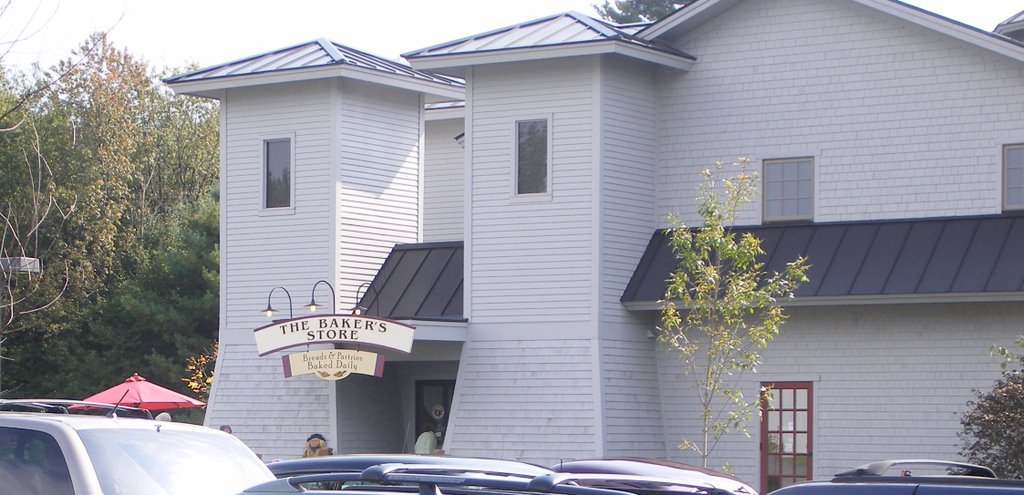
A brotform (also known as brotformen or banneton) is a breadmold made of cane that is used to form and shape artisan loaves during the proofing/raising stage. When you see those hearth style breads with indentations in the crust, they were raised in a brotform. I have always wanted one, especially since I bake a lot of sourdough starter based breads and what better excuse to buy one than to make it the ultimate souvenir from a visit to King Arthur Flour in Norwich, VT during my recent vacation or BWOF (Big Week of Funness) as MBH called my week off from the salt mine.


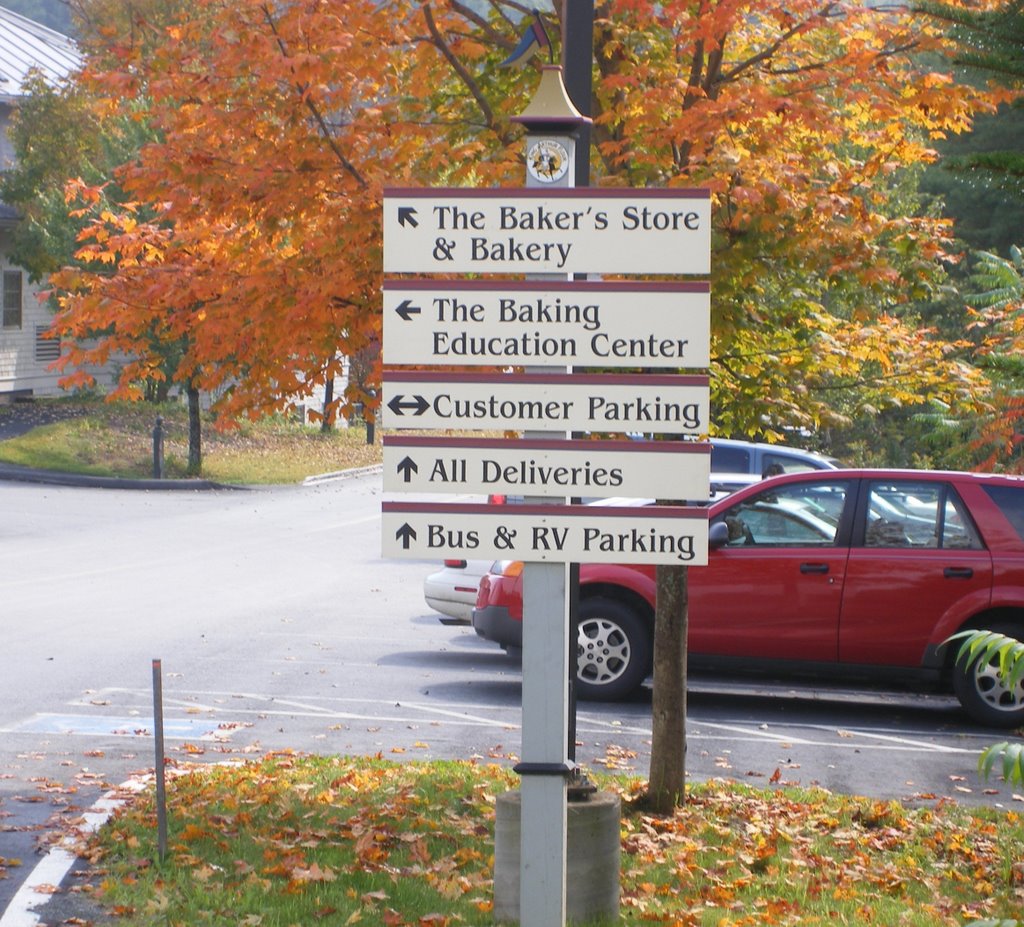
The Baker's Store at King Arthur is overwhelming to say the least. Every flour they make is available in 3lb and 5lb bags with their most popular flours like the unbleached all purpose and whole wheat also available in 10lb, 20lb, and 50lb bags. I could have put one bag of everything on the wall of flour in my cart but knew that would also mean renting a box truck to get it home. Of course with such a selection not to mention an in-house bakery, I couldn't leave without purchasing a little bit of flour as well a little treat to snack on during the two and half hour drive home, a slice of Vermont apple pie with a super flaky, buttery crust.


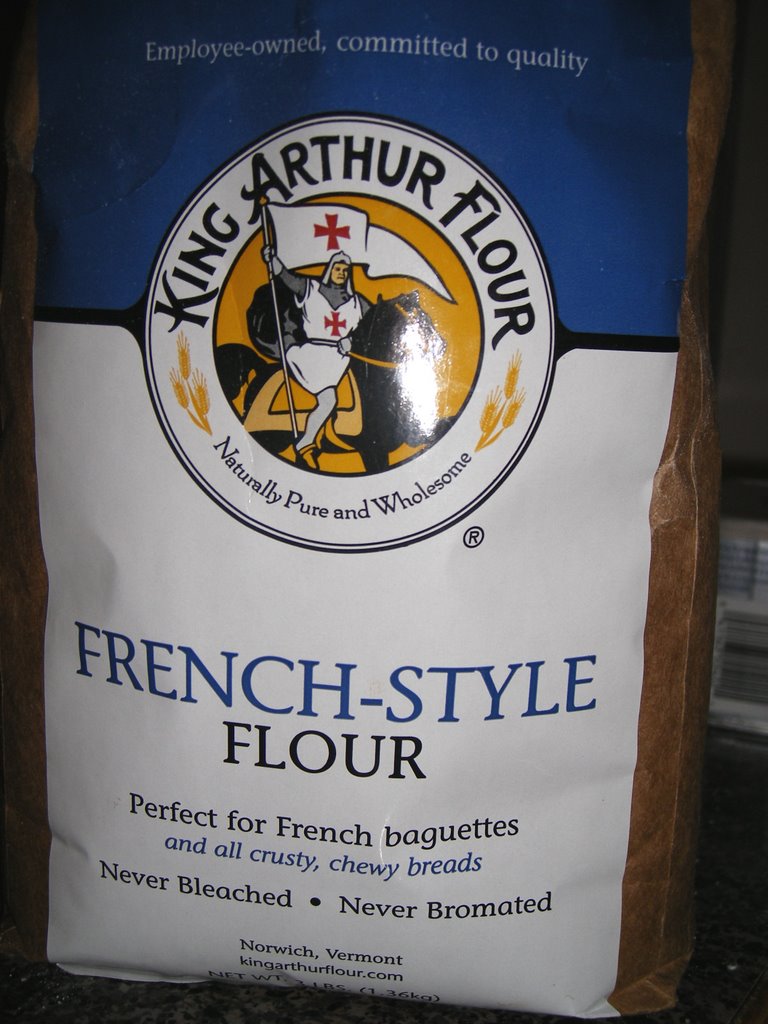
Last night, I used not only used my brotform for the first time but also the King Arthur French Style flour. This is some of the most lovely flour I have ever had the pleasure of working with while making bread. It was silky and formed a dough that had a velvet feel after kneading. I used the recipe for French Style Baguettes on the back but since I was making a boule, I added a step to the recipe by forming a sponge first. I like the flavour that develops in breads by doing this extra step. Making a sponge normally adds about two hours to the whole making and baking process but is really worth it for the flavour and in the case of artisan breads, the texture that develops.


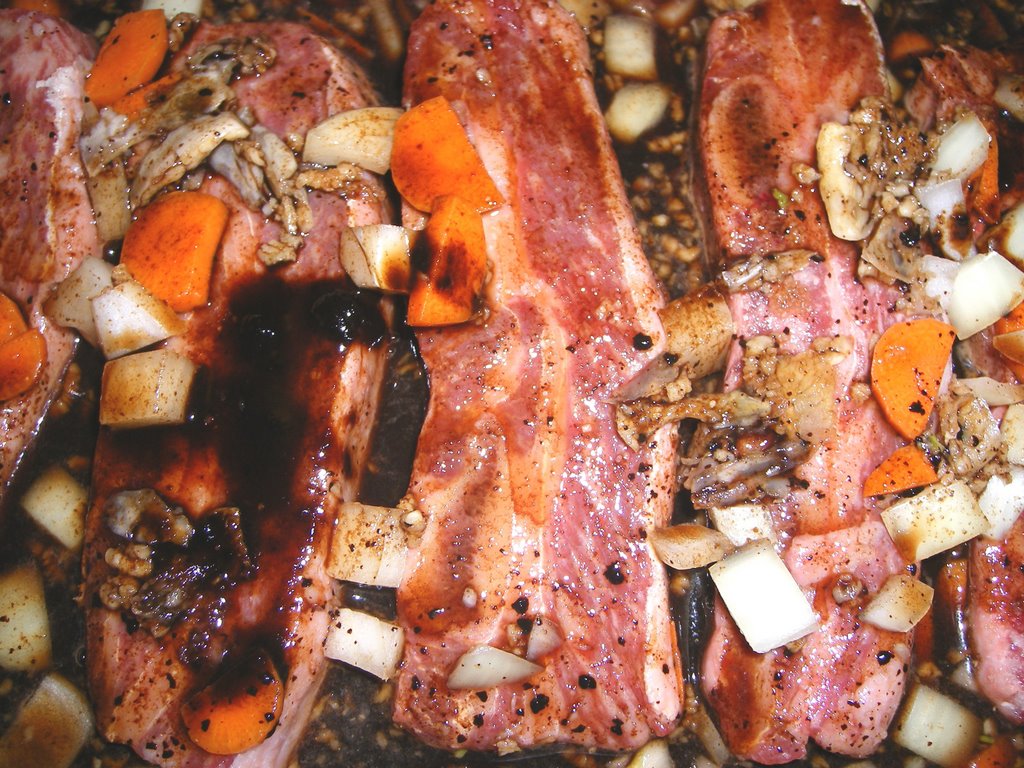
I served the boule with Braised Beef Shortribs, a recipe from Spice: Flavors Eastern Mediterranean by Ana Sortun. The marinade was a bit heavy on the balsamic vinegar but the tamarind paste/dry white wine was flavourful (I'll cut back the balsamic vinegar from one cup to 3/4 cup next time).


As for the crusty boule? MBH declared it the best one yet...


Dinner Size Crusty Boule

(adapted from Baguette recipe on back of the King Arthur French Style Flour bag)

This recipe can be made in either a stand mixer or by hand.

Sponge:
5 oz of warm (75 - 85 degrees) water
1/2 teaspoon yeast
1 Cup KA French Style flour

Combine ingredients in a glass bowl, cover with plastic wrap and let raise for 2 hours

Dough:
1/2 teaspoon yeast
1 teaspoon salt
3/4 Cup KA French Style flour

Add yeast and salt to proofed sponge, mix well. Add flour 1/4 cup at time, mixing until a shaggy dough ball forms. (If you are making this by hand, you may need to combine the last 1/4 cup of flour by hand). Turn out dough ball onto a lightly floured surface. Knead until smooth (about 3-5 minutes), cover and let rest for 15 minutes. Knead relaxed dough for 5-7 minutes more or until very velvety smooth dough results or dough passes "windowpane" test. Place dough into lightly greased bowl, cover and let rise in draft free place for 2 hours or until triple in size. Punch risen dough down gently. Form boule and let rise again until double in size (use prepared brotform for 2nd raise, if using brotform).

Baking:
Adjust oven racks so one is on bottom and other in middle position (if using baking stone or unglazed quarry tiles, place on middle rack now as well). Pre-heat oven for one hour at 450 degrees. 45 minutes into pre-heat, place small baking pan (9 x 9 x 2) filled 3/4 way up side with hot water onto bottom rack. Very gently unmold boule if using brotform onto prepared baking sheet (lightly greased with dusting of cornmeal) or oven peel and slash if desired. Lightly spritz boule with water and quickly place into oven. Bake for 20 - 25 minutes or until crust is golden brown. For extra crunchy crust, spritz boule again at 10 minutes into baking time.

Let cool for 1 hour before serving

Friday, October 13, 2006

The Perfect Lemon Poppyseed Muffin


Muffins are an uniquely American food. They are like having cake for breakfast. Next to bagels, muffins are the most consumed breakfast bread in America. On any given morning, the bakeshops and coffee shops in every major city offer a staggering variety of muffins ranging the mundane but tasty corn and honey bran to the fruity-sweet cranberry-orange and blueberry. There are exotic flavours like kiwi-strawberry and pineapple-mango. And then, there is my favourite flavour, lemon poppyseed.

A really good lemon poppyseed muffin will not be neon yellow. It will not be sickly sweet like over-sugared lemonade or overly sour like children’s candy. It will not have sugar on top or twists of lemon peel for decoration. Poppyseeds will not be limited to the stump. It will not be heavy and greasy with oil nor will it be dry and crumbly so it falls apart as you eat it or pull off the top to eat it from the inside out (as I like to do).

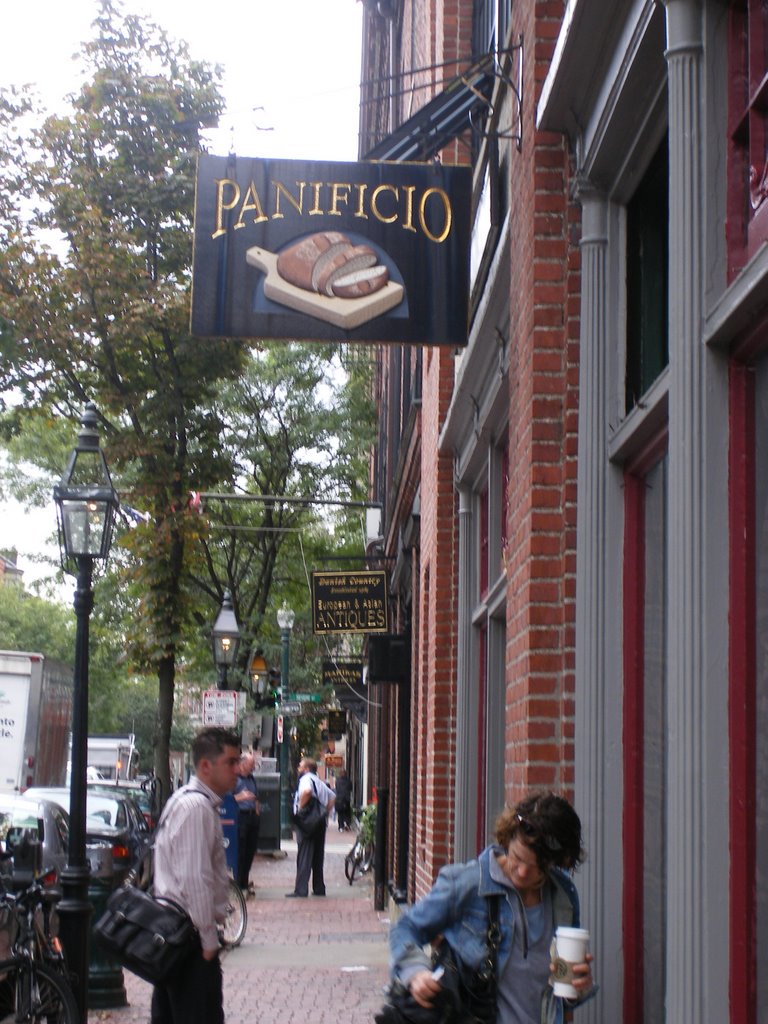
I have spent considerable time and effort these past few years investigating where in Boston to find the best lemon poppyseed muffin. And after sampling lemon poppyseed muffins in every bakeshop/coffee shop within a ten-mile radius of our home, I have decided that Panificio on Charles Street has the very best lemon poppyseed muffin in Boston.


Their lemon poppyseed muffin is filled with scads of poppyseeds and little flecks of lemon zest evenly distributed throughout the muffin. It tastes subtly of fresh lemons and sunshine. The outside is golden with little cracks showing peeks of the pale white and moist insides. It has a high, wide, tapering crown and short squat stump. It does not fall to pieces when I tear off the stump but sticks together when pick up dropped morsels from my plate and scrunch them together. It has the texture of a fine cake and the lightness of a good Southern biscuit.


In other words, Panificio’s muffin is pure lemon poppyseed manna from heaven.

Sunday, October 08, 2006

Ask Breadchick: Your Questions Answered

When I announced a few posts ago that I was taking The Sour Dough to an all food format, a suggestion came from Jill over at "Writing or Typing" that I write an "Ask Breadchick" post every once in a while to answer vexing questions about bread, baking bread and whatever else food related my readers thought I might be able to offer advice about and/or have answers for. While I loved the idea of offering advice on bread baking and anything you, my readers, think I might know, I wasn't so sure I was exactly qualified. Afterall, I'm simply a fairly good home cook who, for whatever reason, seems to have a symbiotic relationship with yeast, flour, water, and salt and the chemical reaction that happens when you combine these ingredients together to form a wad of dough, pound the wad of dough on a hard surface for a bit, leave it alone for a bit longer, and then throw it into an oven to bake for about 40 minutes. But after much discussion about whether I would be any good at offering advice, MBH reminded me that I love to give advice even when I'm not asked. I was still not convinced until today when through a fluke of fate (and my bizarre love of mid-20th century cookbooks) I discovered I had the answer or at least the resources to find the answer to a problem a fellow foodblogger, Jo over at Amuse Bouche was having locating a recipe. Since both Jill and Jo were, without knowing it when they commented on two posts, instrumental in pushing me over the should I or shouldn't I threshold I'll use their two queries as the inaugural "Ask Breadchick" post.

Jill wanted to know why sometimes when she made a biga that it was perfect and other times there was what appeared to be a watery mess under a layer of frothy foam. First, for those of you who don't bake yeast breads a biga is what Italian breadmakers use as a 'pre-ferment' (starter like). The biga can be made two ways: with a bit of dough from a previous batch of bread mixed with water to form a batter-like mixture or by mixing some of the flour, water, and yeast from the recipe together and then letting the biga sit for anywhere from a few hours up to three days. The idea is that through "feeding" the biga for a bit, the flavour of the bread is developed and in the case of good hearty loaves like ciabatta and rustic Italian Rosemary, it helps develop those large holes in the bread. That "watery mess" Jill reports happening underneath her fluffy biga top is the same stuff that is on top of a sourdough starter after a feeding, hooch. When yeast starters like biga and sourdough feed and then digest the flour (remember, yeast is a living organism), they leave behind a mildly alcoholic watery liquid waste. The Goldrushers of '49 called the layer of liquid "hooch" and would drink it when they ran out of whiskey thus the now common name for bad whiskey of "hooch". It is a sign of what I call hyperactive yeast beasts. They fed fast and furious and then when the time to use them came they were exhausted. Using a starter or biga in this state will result in flat bread that doesn't rise or doesn't produce those big holes that are signatures of starter breads. How do you fix this or can you fix this? Yes, usually. When this happens to me, I stir it all back together again, do a power feed (basically two quick feeds, one right after the other within 2 hour of each other) and keep a close eye on the mixture, when it is at it foamiest, I make my bread. This method normally puts my starters and bigas back to rights. Another cause can be weather related. If it is humid when I feed my bigas/starters, I cut back on the liquid part of the feeding by about 2 Tablespoons as the humidity in the air will add that back. Vis-versa when it is really dry (like in the winter), I add 2 Tablespoons of liquid during a feed. Let us know if this helps, Jill.

Jo wrote to me after seeing my post about my recent purchases of older cookbooks and noticed that some of the purchases where volumes of Woman's Day "Encyclopedia of Cooking" from the 1960s. Jo is teaching a class on food fads and was trying to locate a recipe her mother used to make for Sweet and Sour Pork. Her mother was sure the recipe was from the wonderful series by Time-Life called "Foods of the World" (that came out around the same time as the WD "Encyclopedia of Cooking") and Jo now has in her possession. Jo looked in the volume about Chinese cooking and it wasn't there but between her mother and her, they came up with a pretty good facsimile of the recipe. Then Jo saw my posting about my new cookbooks (well new to me anyways) and it all came back to her and she was sure the recipe was really in WD "Encyclopedia of Cooking". Jo wanted to know if I would be so kind as to take a look and see if her memory was right. Well Jo, I'm happy to write that it is INDEED from The WD Encyclopedia of Cooking V. 3, under Chinese Cooking that your recipe for "Sweet and Sour Pork" (T'ang Ts'u Chu Jo) can be found. Here's the recipe for your class (and for your recipe box). Let us know how the Sweet and Sour Pork turns out and if the students enjoy the recipe. It does look pretty yummy and quaint in that late 50s/early 60s kind of Donna Reed way!

T'ang Ts'u Chu Jo
(Sweet and Sour Pork Honan School)

Oil for deep frying
1lb pork shoulder, cut into 3/4 inch cubes

Batter:
1 egg
1/2 cup all purpose flour
1/2 teaspoon salt
1/4 cup water

Sauce:
1 cup pineapple cubes
1 green pepper, cut into squares
1/2 cup vinegar
1/4 cup firmly packed brown sugar
3/4 cup water
1 tablespoon molasses

Thickening:
2 tablespoon cornstarch
1/4 cup water

Heat oil in a deep frying pan. Mix the batter. Dip pork cubes into batter and drop into the boiling oil. When cubes brown, remove them and drain on absorbent paper. Mix ingredients for the sauce in a pan and bring slowly to a boil, stirring constantly. Pour thickening into the sauce; when the sauce becomes thick and smooth, add meat and mix well. When very hot, serve at once. Makes 4 servings.

Friday, October 06, 2006

Bribing your colleagues


Every Thursday morning at 10AM, we have a meeting at work to discuss custom loudspeakers that are under development for projects. This meeting brings to light not only any technical obstacles that may have arisen in the prior week but sometimes personal bias against some of our customers; especially our customers that ALWAYS call us about two weeks before they need their speakers delivered knowing full well it is at least eight weeks to deliver a custom product. The meeting also brings out a certain amount of animosity between the members of our little cozy family of mad scientists. It often gets tense, especially when a few of our young turks like to start their sentences with "that won't work" in an attempt to strut their stuff and try to show us sly old foxes a thing or two about loudspeaker design (which they do sometimes, disproving the adage you can't teach an old dog a new trick).

It seems that my projects are overwhelmingly of the type where I need a custom speaker in a custom colour onsite in four to six weeks. Whenever I walk into the room with my black Moleskine and an armload of manila job folders there is a collective groan from the assembled group, because they KNOW I am going to present some project that has to have it's product yesterday. The only thing that saves me from being run out of the room tarred, feathered and on a rail along with my folders and my unreasonable requests? I always bring food.

Normally this food consists of some type of baked goodie like home-made cinnamon rolls or scones. Sometimes, I stop at the Dunkin Donuts up the way from our offices and get a box of coffee and a dozen donuts, heavy on the chocolate covered with sprinkles type. But yesterday, I may have even topped the homemade cinnamon and pecan pull apart bread I brought a few weeks ago to bribe the guys into releasing a drawing in one day versus the normal one week time-frame. Because yesterday, I brought a homemade cheesecake; a mini-chocolate chip cheesecake to boot to the meeting.

I think when I sat the cheescake and 1/2 gallon of milk down on the table, everyone KNEW something huge was coming. A certain client just discovered that next month is November and they have a HUGE world famous to-do every year starting around the week before Thanksgiving and running into the New Year (wink-wink). They figured now is pretty good time to order that custom speaker we showed them in the Spring and, oh yea, they want to have it before opening night in four weeks. Sure I told our customer, knowing full well that it would be pushing the envelope of possibility but safe in the knowledge that it could happen because at home, in a cabinet, rested my secret weapon for success: a springform pan, a bag of mini chocolate chips, and box of graham crackers.

Mini Chocolate Chip Cheesecake
(Note: my mom found this recipe on the back of Eagle Brand Condensed Milk many years ago. I've tried a few other recipes for cheesecake but this makes the best, dense but not too heavy cheesecake. I've made a few modifications to the recipe because I have 10" springform pan. See here for the original recipe for a 9" pan. One last thing, this is cheesecake, don't skimp and use anything but the real butter and cream cheese)

1 3/4 cups finely crushed graham crackers
1/2 cup (1 stick) butter, melted
3 (8 ounce) packages cream cheese, softened
1 (14 ounce) can sweetened condensed milk (NOT evaporated milk)
3 eggs
2 teaspoons vanilla extract
1 1/2 cup mini semi-sweet chocolate chips
1 teaspoon flour

Preheat oven to 300 degrees F. Combine graham cracker crumbs and butter; press firmly on bottom of springform pan. In a large mixing bowl, beat cream cheese until fluffy. Gradually beat in condensed milk until smooth. Add eggs, one at a time and vanilla; mix well. In small bowl, toss 3/4 cup chocolate chips with flour to coat; stir into cream cheese mixture.
Pour into prepared pan (spray sides of pan with light coating of cooking spray and flour). Sprinkle remaining chocolate chips evenly over top. Bake 60 minutes or until set. Let cool completely and refrigerate for 2 hours before serving.


Saturday, September 30, 2006

This Space for Hire?

I've been giving some great thought about The Sour Dough and how I use my blog to post about various aspects of my life, career, and one of my deepest passions, food. I love food and all aspects of food. I love looking at food, reading about food and writing about food. I love the cooking of food, the shopping for food and I especially love the eating of food. When I started this blog almost two years ago, the idea behind it was to give me a public outlet for my food habit, especially my bread baking. For the most part, I think The Sour Dough has succeeded. But, there are things I want to make better and do better.

I spent quite a bit of time the past two weeks during my vacation looking at the various food blogs I admire and the other types of blogs I read. I took notes about what type of layouts I liked and which one's I didn't. I even took for a test drive a few other blog formats like Word Press, Type Pad, and Movable Type. After quite a bit of soul searching and at much urging from MBH and a few of you, I have decided to make a few changes and now, as the seasons start to change in earnest from Summer to Fall around New England, seems like the perfect time to begin those changes.

One of the changes you will notice is that going forward, The Sour Dough will be all about food and food related subjects. This doesn't mean that I won't tell you about restaurants I ate at while on job sites or let you know what LB and MBH are up to because all those things are woven into my love of food. But what it means is that the rants and raves about my non-food life will not be found here (If you are interested in keeping up with my audio self, here is where you can go).

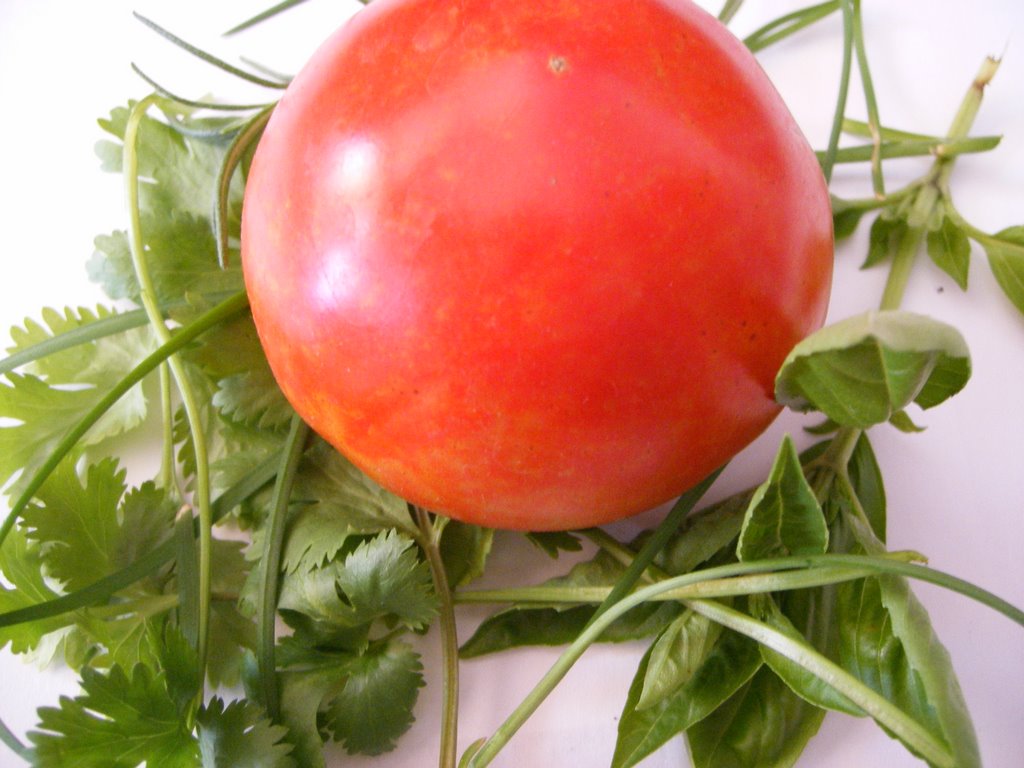
One change has already happened. A little over a month ago, MBH convinced me I needed a new digital camera and I needed to learn how to take good macro shots of food. I purchased a Fuji FinePix F470 and have fallen in love with shooting pictures of the food I make and eat using the macro setting to get "food porn shots" like this tomato and various herbs from my garden.


A few of you have told me I should do a podcast. I'm not sure if the world is ready to hear my "Minnie Mouse" voice babble about food, bread, and ramble on about anything yet. That will probably wait but, rest assured, I am mulling it over.

Finally, I have secured www.breadchick.com as a domain name (a test page is there right now). I'm in the process of trying to decide if I want to stay with Blogger to host this domain or move The Sour Dough and use other blogging software. I'm still debating about this so don't erase the Blogger bookmark just yet. MBH will tell you it is because I'm a luddite when it comes to computer things but we'll see.

So, as we move closer to the two year anniversary of The Sour Dough, keep your eyes peeled because just like the seasons, changes are coming soon...

Friday, September 29, 2006

Haymarket: A Boston Bargin Hunters Dream


On Fridays and Saturdays, just about every weekend of the year, rain or shine (or even snow), Boston is home to one of the oldest outdoor produce and fish markets in America, Haymarket. Haymarket has been in the same spot in Boston for over 140 years, at the corner of Hanover and Blackstone Streets near the oldest continuous operating restaurant in the United States, The Union Oyster House and across the street from the oldest continuous operating public house in the United States, The Bell and Hand.

At Haymarket, one can purchase at rock bottom and dirt cheap prices any variety of fruit, vegetable, fish, meat, nuts, and cheese from places as close as Concord, MA and as far away as Malaysia. The variety of produce and other goods offered is astounding. You will find plantains next to watermelon. Watercress sells beside heads of cabbage. You want to find the perfect poblano peppers for stuffing, there will be four stalls across from each other selling them and each will try to outdo the other in pricing. Berries and fruits that you have never seen before sit next to strawberries and blackberries.


The best time to go is early Friday or Saturday morning when the selection is the best and the vendors are the friendliest. Third and fourth generation owners who hawk their wares in the time honoured fashion of calling out to passerbys a steady stream of what is available run most of the stands. It is not uncommon to hear “Fresh tomatoes, 10 for a dollar” or “Nice green peppers, 4 for .50 cents.” You can actually hear the fishmonger yell out “cockles and mussels” if you linger long enough around where the fish stalls are located. Some of the vendors are what can only be termed as crotchety. During a recent visit a few weekends ago on a bright cool late summer morning, MBH and I witnessed what can only be termed a typical exchange between one salty New England green-grocer and a shopper when he assulted his customer with a sarcastic “If I wanted to cheat you, I’d charge you 1 for $4” and all the while pointing to a sign for summer squash showing “4 for $1” and filling a bag of fresh mushrooms for lady.


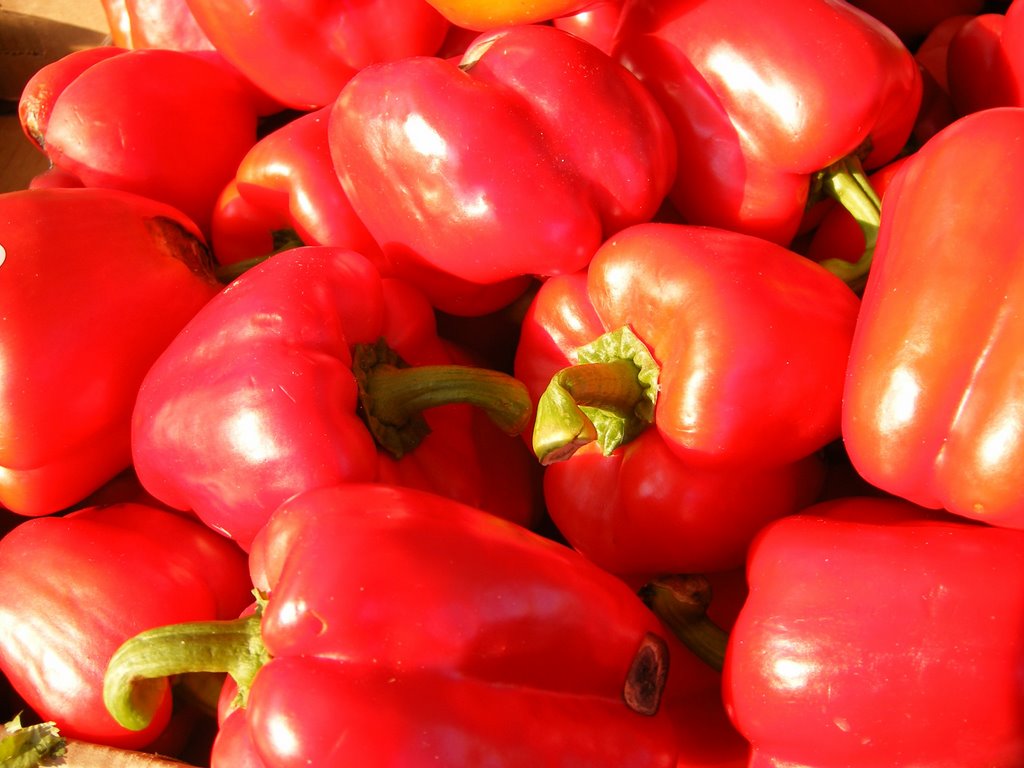
I like to go and pick up a variety of fruits and vegetables around which I plan the week’s meals. Our most recent visit consisted of purchases of cilantro, peppers in red, yellow and orange, shell beans, raspberries, peaches, plums, and an avocado. The cilantro ended up paired with my homegrown tomatoes, basil, garlic and garden chives to form a wonderful home made bruscetta. I roasted the peppers along with a bumper crop of my garden green peppers and have topped sandwiches for lunches with them all week. The fruit made a cobbler and provided a nice afternoon pick me up at work. The shell beans or “shelly beans” as MBH knows them as were made in the good old-fashioned Southern way of boiling them with chunks of salt pork and pepper, ala MBH Mother’s recipe. The only disappointing purchase was the avocado. It was not ripe and then went rotten before it ripened. But for 10 cents, I can’t complain and it was more than worth the price of admission to the circus.

Thursday, September 21, 2006

Like I Need Another Hole in My Head...


More cookbooks in one week than you can shake a stick at

They say the first step to getting help for an addiction is admitting you have a problem. To paraphrase MBH here, "Hello. My name is Breadchick and I'm a bookaholic".

To be precise, I am a cookbookaholic and, as if you and I needed any further proof of my habit than the picture above, I have purchased fourteen cookbooks in the past six days. That means I have averaged 2.333333 ledgers of recipe-delight a day. I won't tell you what this little bender has cost me but, I should have made sure one of these books was "101 Things to Do with Ramen Noodles".

Sunday, September 17, 2006

Weekend Cookbook Challenge #9: A Local Ingredient

This month's installment of Weekend Cookbook Challenge brings me back home, after several episodes of cooking using ingredients and recipes from far and away places, with the theme of cook using an ingredient found locally. I took this challenge to mean not only locally but also an ingredient that screams of where you live. Since I live in New England and more specifically Boston, I knew there was only one thing (besides Baked Beans which I already did here for WCC#7), I could cook, Boston Clam Chowder made with Cape Cod Quahog Clams.

Quahog (pronounced KO-hog) Clams are the largest of the hard shell clams found very abundantly from the coastal waters of Maine down to the New Jersey shore. Quahogs are known locally as "chowder clams" because these clams are so large (the size of a dessert plate sometimes) that the meat is tough enough to withstand a long simmer in the stewpot and not get rubbery. Early fall through early winter is the best time for clams and scallops in New England because the waters are starting to cool down and they are at their sweetest. There are several good recipes for New England Clam Chowder with the Legal Seafoods version probably the most famous (it has been served at every US presidental inaguration since 1981). Some of the recipes make a thick chowder and call for up to a cup of flour or other thickening agents but true New England chowders aren't particularly thick relying on the starch from the potatoes to thicken the chowder. I own several cookbooks with good recipes for New England Clam Chowder but chose to make tonight's chowder from the newest edition to my every expanding cookbook collection, The New England Cookbook by Brooke Dojny, "Thick and Creamy Boston Clam Chowder". I can see this cookbook quickly becoming one of my favourites to not only cook from but to read from as well. Each recipe is well written and includes not only a story about the history of the food as to how it relates to New England but has these wonderful sidebars that include quotes from famous and common New Englanders. My favourite quote so far is from a nine year old who told his mother the reason he filled up on Dilly Bean Pickles at a church supper was because it was the only thing he could find to eat he liked.

The Boston version is the thickest of the New England Clam Chowder because in additon to almost 5 cups of diced potatoes it also calls for 1/4 cup of flour added to the sauted onions and salt pork drippings to make a roux. The Boston version also calls for not only milk but light cream (or half and half). The traditional accompaniment with New England Clam Chowder is the Crown Pilot Cracker, which is basically hardtack, and was almost discontinued several years ago but was saved by the outrage of the normally reticent New England populace. But tonight I served it with another old fashioned New England staple, Anadama Bread made in my rarely used bread machine. Anadama bread is a hearty bread that uses corn mush as it's base. According to legend, a crusty backwoodsman was married to an awful cook named Anna, who could only make corn meal mush. One night, after a long, cold day in the woods, he came home to find yet another meal of corn meal mush, he grabbed the bowl, went to the cupboard and grabbed some molasses, some yeast, and some flour, stirred them into the bowl to form a dough, and placed the bowl into the coals. While the bread baked, he muttered under his breath "Damn you, Anna." over and over. Thus the name Anadama bread.

Thick and Creamy Boston Clam Chowder
from The New England Cookbook

1/4lb salt pork, diced (make sure the piece has a good mix of meat and fat)
1 large onion, chopped
1/4 cup flour
3 cups whole milk
4 cups clam liquor, juice or broth
5 cups diced potatoes
1 large bay leaves
2 tsp dry thyme
3 cups coarsely chopped clams
2 cups light creme or half and half
salt and pepper taste
1 tablespoon butter

Prepare the clams and set aside. Cook the salt pork in a large stock pot over medium heat until all the fat is rendered and the pork bits are crispy. Using a slotted spoon, remove the pork bits and set aside on paper towel to drain. Add the onion and cook until soft. Add the flour and stir constantly for 2 minutes until a roux is formed. Add milk, clam juice, potatoes, bay leaf, and thyme and cook for about 10 minutes at a simmer or until the potatoes are just tender. Add the clams and light creme and let simmer for 10 minutes or until the clams are heated through. Serve with crackers or a hearty bread.

Anadama Bread
from Bread Machine Magic by Linda Rehberg and Lois Conway

3/4 cup water (82 degrees)
2 cups bread flour
1/4 coarse ground yellow cornmeal
1 teaspoon salt
1 tablespoon butter (softened)
2 tablespoon molasses (use any type BUT blackstrap)
1 1/2 teaspoon bread machine yeast (some machines, like mine require a bit more)

Add wet ingredients to breadmachine pan, the dry ingredients, adding yeast last in a little "valley" on top of dry ingredients. Use the Basic Loaf, Medium Crust setting on your machine. Makes a 1 lb loaf.


Wednesday, September 06, 2006

Five Things to Eat Before You Die


I was tagged today by the lovely Sara over I Like to Cook to participate in a food blogger project started at the The Traveler's Lunchbox: Things to Eat Before You Die. The premise of the project is for food bloggers to post five things they have eaten that everyone in the world should try at least once before they die. How cool is this?! I love the idea of sharing some of my favourite foods with people. It is one of the reasons most of us blog about food; to share our food experience and to expand our palette. MBH is always looking for a new food group, I'm quite sure we will find one in the list (it was over 1000 at last check) for him to try.


My List of Five Things to Eat Before You Die:
(in no particular order of preference)
1. Planked Lake Superior Whitefish from Audies in Mackinaw City, MI
2. Smoked Salmon Quiche on the Prix Fixe from La Reserve de Quasimodo in Paris
3. Fish and Chips with Mushy Peas from The Tea Clipper pub in Knightsbridge, London
4. Nantucket Bay Scallop Roll in October on Nantucket
5. Braised Beef Short Ribs from Oleana in Cambridge, MA

Fellow bloggers (including one travel podcaster who ALWAYS has a restaurant review and one daily photo blogger who has great cooking tips) I'm tagging:

1. Dan O' Leary over at Hotel Coffee
2. Maikopunk over at It's a Good Thing I'm Book Smart
3. Ham over at London Daily Photo and Gub-Gub's Blog
4. Clare over at eatstuff.net
5. boo_licious over at masak-masak

Monday, September 04, 2006

Weekend Cookbook Challenge #8: Foreign Dish - Creme Brulee


Once again, it is time for the Weekend Cookbook Challenge. This month it was co-hosted by Ruth over at Once Upon a Feast and our normal hostess, Sara from I Like to Cook. The theme for this installment is to cook a foreign dish from as usual a seldom or rarely used cookbook.
My dish: Creme Brulee. The cookbook: Les Halles Cookbook by Anthony Bourdain.

I've had this cookbook for over a year but never cooked with it. It was holding up the nightstand on my side of the bed and I had frankly forgotten I owned it. This cookbook is full of Anthony Bourdain's cynical, funny but frank remarks and is surprisingly easy to cook from with step by step instructions, especially important if you are taking a first plunge into classic French Bistro cooking . The cookbook is the perfect size for my counters, has large print for my aging eyes, and a picture accompanies every recipe so you won't guess if you got it right. One thing that casual cooks may find daunting with this cookbook is that it doesn't use measurements for dry ingredients but rather weights. I have been wanting to have a good kitchen scale for some time (Note to MBH: hint, hint, hint) but MBH's postal scale works quite well in a pinch.

I chose to make creme brulee for a quite a few reasons. First and foremost, creme brulee is my favourite dessert. When I'm in Paris I'll have it at least once a day sometimes two times a day. I go out of my way anywhere my travels take me to sample this simple dessert. One taste of a well made creme brulee and the smooth, vanilla scented creme will transport me immediately to La Rotonde on the corner of Boulevard du Montparnarsse and Boulevard Raspail.

Another reason I chose to make creme brulee was it would provide me with a good reason to add a culinary torch to my kitchen gadget collection. I have read recipes that call for toasting the brown sugar that goes on top of the baked custard by running the ramekins under the broiler for five minutes. But, when I'm impatiently waiting to crunch my spoon through the carmelized topping, I want to have immediate gratification. Besides, how cool is it to own a mini blow torch??!!

The recipe in Les Halles is the classic recipe I found in several cookbooks calling for 10 egg yolks whipped until frothy, a quart of heavy cream, 1 vanilla bean (don't skimp here, part of the dish is the little black specs of vanilla bean on the bottom of the ramekin) split and scraped into heavy cream, and six ounces of sugar (split half between the cream and half into the egg yolks). The heavy cream, vanilla, and half the sugar are slowly heated to simmering/easy boil over medium heat. The egg yolks and other half of the sugar are slowly added to the warm cream mixture (use a whisk and stir constantly while adding the yolks or they will curdle). This creates a classic custard (if you can find them, fresh farm eggs will make the custard especially rich and yellow as fresh farm egg yolks are thicker in consistency and very yellow). Split the custard between six to eight creme brulee ramekins or custard cups. Place the ramekins in a water bath (water should be half way up the side of the ramekins) and bake at 300 degrees until the custard is firm but wiggly in the center (most recipes say 45 minutes or so, it took over a full hour for me yesterday). Let cool, top with brown sugar and using either the broiler of your oven or a culinary torch, toast the brown sugar until golden brown.


Thursday, August 31, 2006

Another Notch on my Gunbelt


It has been a whirlwind month. Since I last posted, I have been home for a grand total of 10 days. Quite a bit of that time has been on various business trips to places like Minneapolis where I spent 3 days in the hottest weather Minneapolis has ever had, Michigan where I did a see every relative I could see in 48 hours over the weekend before a jam packed see every dealer between Kalamazoo and Detroit 48 hours, and Dallas where I spent 3 days inside the air-conditioned comfort of the Meyerson Symphony Hall showing off our speakers to various audio consultants. Tonight, at 10:15pm, my plane touched down at Logan International Airport after three days in Lexington, KY where a colleague and I tuned the upgraded sound system for the University of Kentucky Wildcats.

The sound system here is really impressive because it uses our biggest and loudest loudspeaker. These big boys get up go and what is amazing is that when they are tuned correctly they sound almost as good as home stereo speakers. I don't think I'm saying too much when I say Commonwealth Stadium now has the best sound system in the SEC. The campus police were getting phone calls from 6 miles away when we cranked Creed's "Higher". Maybe this was because we were easily achieving 110dB OUTDOORS; something really hard to do because the wind likes to blow the high frequencies away and you don't have reflections from the room to help the system get really loud. I really felt sorry for the guys working on the scoreboard opposite the scoreboard where our speakers are located because they had three solid days of pink noise and music hitting them full force. I have no idea why they kept working but when they would call down with a request, I would try and accommodate it (I drew the line when they requested Metallica but played some Hank Williams at 110dB for them). For more pictures of the sound system at University of Kentucky, for more pictures of the UoK sound system go here and Todd, over at 1000 Movies in 1 Year, HERE is a special shot I took just for you!

Tuning a sound system outdoors is actually more difficult than tuning one indoors. For one thing, depending on the wind, humidity, and air temperature (things that are more controllable indoors), the sound system can behave radically differently and not necessarily for the better. For example, yesterday it was rainy but cool. This meant that everything from about 2.5 kHz and up was really "snappy" sounding. I had to make sure the eq settings we were using weren't over compensating for the existing weather conditions because under sunny and warm conditions, using eq settings that dull down the high frequencies too much would leave a muddled mess. At the same time, I had to make things a little duller because under similar weather conditions the high frequencies would rip people's heads off, especially when the announcer screams "TOUCHDOWN KENTUCKY" into the microphone.

When I wasn't turning the 68,000 seat stadium sound system into my own personal I-Pod, I was eating in some pretty fine restaurants. The best of which was Ramsey's Diner, where I had a true southern meal of chicken fried pan steak with gravy, fried green tomatoes, southern green beans, and real mashed potatoes with more gravy. I topped this fabulous meal off with a piece of their version of Kentucky Derby Pie and a milk. Good thing my hotel had day passes to the Bally's Fitness across the street, because after meals like that, I needed to run off a few more calories than just running stadium seats all day was doing.

Lexington is a really neat town but for much of the time I was in the lovely city, there were literal and figurative grey clouds hanging over the city. I flew in the day after Comair flight 5191 crashed at the Lexington airport and was checking into my hotel the same time most the members of Delta Airlines "Care Team" were checking in to the same hotel. Every morning and evening, they would huddle in the lobby and discuss what next they needed to do for the families of the victims and the lone survivor, whose wife was also staying at our hotel. There were Kentucky state police officers stationed in the parking lot and lobby because the hotel didn't want the press or people who weren't staying at the hotel hanging around. It was the first time I have ever been that close to people trying to cope with a tragedy like an airplane crash. I can't imagine the pain all those people are coping with and my thoughts were often with the victims and families during my week in Lexington.

Tonight, when I boarded my plane for my flight between Lexington and Pittsburgh, I said a little prayer for a safe flight and for the first time ever, shut my window shade during a take off so I wouldn't see the crash site as my plane lifted off from the runway and flew over where the wreckage was still scattered below. There for the grace of God go I...